Takes an RGB array/filename and composites an image overlay over
the full image. For pixel-positioned sprite, label, glyph, or billboard
overlays, use render_sprite_overlay().
render_image_overlay(
  image,
  image_overlay = NULL,
  rescale_original = FALSE,
  convert_overlay_colorspace = TRUE,
  alpha = NA,
  filename = NULL,
  preview = FALSE
)
Arguments
- image
3-layer RGB/4-layer RGBA array,
rayimgclass, or filename of an image.- image_overlay
Default
NULL. 3-layer RGB/4-layer RGBA array,rayimgclass, or filename of an image. This image will be resized to the dimensions ofimageif it does not match exactly, unlessrescale_original = TRUE.- rescale_original
Default
FALSE. IfTRUE, function will resize the original image to match the overlay.- convert_overlay_colorspace
Default
TRUE. Whether to convert the overlay's colorspace to match the underlying image.- alpha
Default
NA, using overlay's alpha channel. Otherwise, this sets the alpha transparency by multiplying the existing alpha channel by this value (between 0 and 1).- filename
Default
NULL. File to save the image to. IfNULLandpreview = FALSE, returns an RGB array.- preview
Default
FALSE. IfTRUE, it will display the image in addition to returning it.
Value
A rayimg RGBA array.
Examples
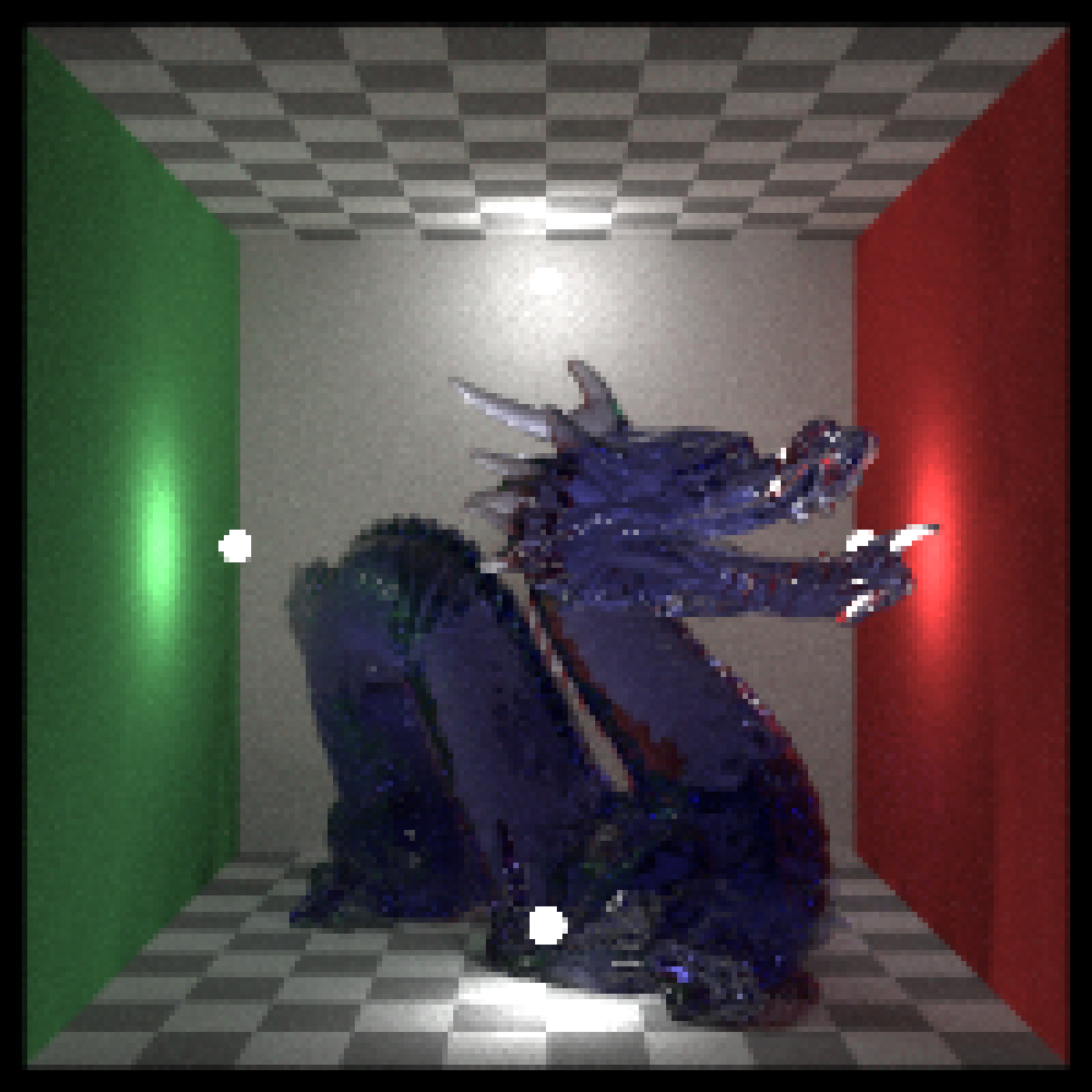
#Plot the dragon
plot_image(dragon)
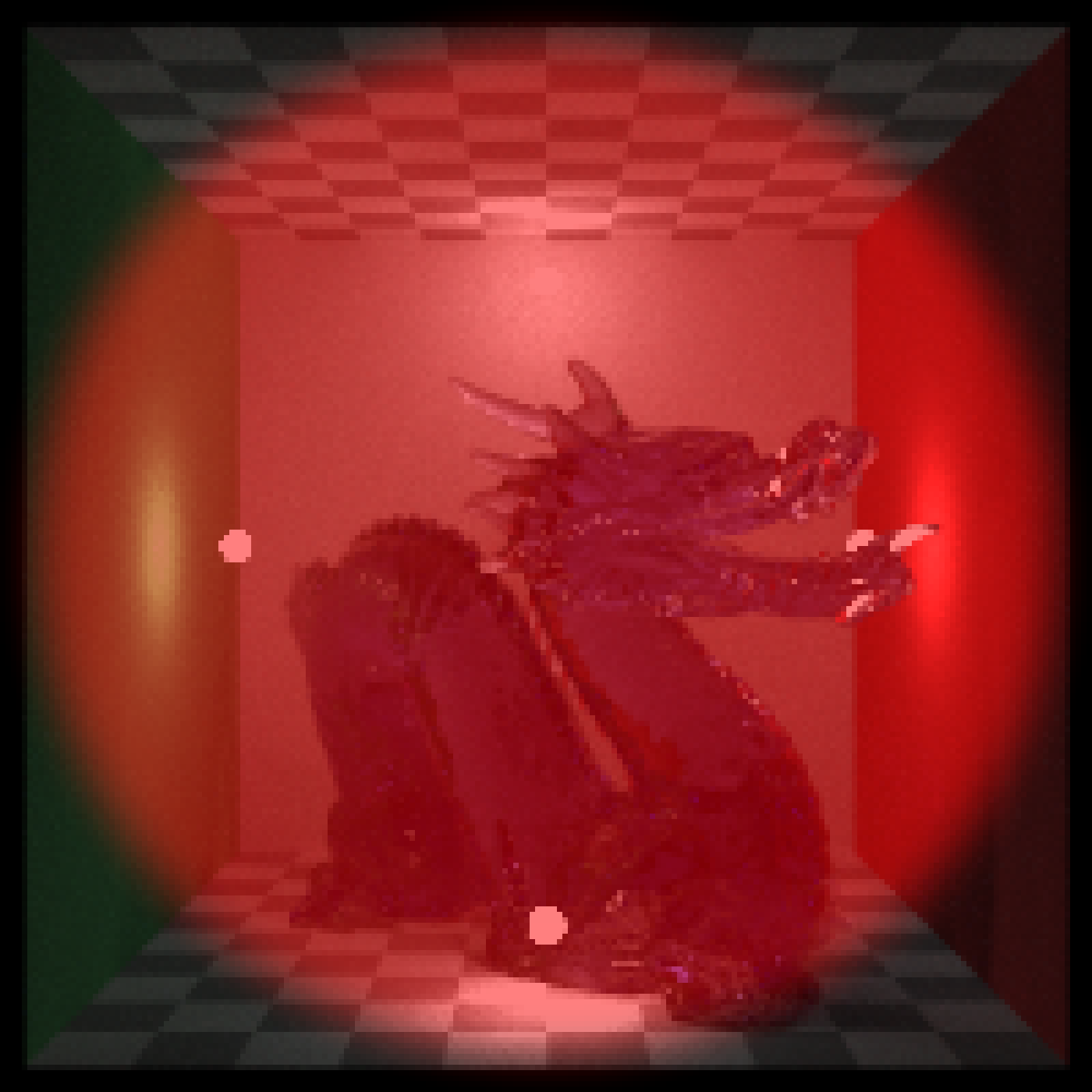
 #Add an overlay of a red semi-transparent circle:
circlemat = generate_2d_disk(min(dim(dragon)[1:2]))
circlemat = circlemat/max(circlemat)
#Create RGBA image, with a transparency of 0.5
rgba_array = array(1, dim=c(nrow(circlemat),ncol(circlemat),4))
rgba_array[,,1] = circlemat
rgba_array[,,2] = 0
rgba_array[,,3] = 0
dragon_clipped = dragon
dragon_clipped[dragon_clipped > 1] = 1
render_image_overlay(dragon_clipped, image_overlay = rgba_array,
alpha=0.5, preview = TRUE)
#Add an overlay of a red semi-transparent circle:
circlemat = generate_2d_disk(min(dim(dragon)[1:2]))
circlemat = circlemat/max(circlemat)
#Create RGBA image, with a transparency of 0.5
rgba_array = array(1, dim=c(nrow(circlemat),ncol(circlemat),4))
rgba_array[,,1] = circlemat
rgba_array[,,2] = 0
rgba_array[,,3] = 0
dragon_clipped = dragon
dragon_clipped[dragon_clipped > 1] = 1
render_image_overlay(dragon_clipped, image_overlay = rgba_array,
alpha=0.5, preview = TRUE)
 # Read photo, convert to ACEScg with CAT (scene)
photo = ray_read_image(sunset_image, normalize = FALSE)
photo_aces = render_convert_colorspace(
photo,
to_mats = CS_ACESCG,
adapt_white = TRUE
)
tmp_txt = tempfile(fileext = ".png")
render_text_image(
"Sunset",
size = 60,
filename = tmp_txt,
color = "#c300ff",
background_alpha = 0
)
# Read logo (display-referred), convert primaries only (no CAT)
logo = ray_read_image(tmp_txt, normalize = FALSE) # sRGB/D65
logo_aces = render_convert_colorspace(
logo,
to_mats = CS_ACESCG,
adapt_white = FALSE
)
# Composite in ACEScg, then display (plot_image converts to sRGB/D65 + OETF)
# Here, we also turn overlay conversion in [render_image_overlay()] off,
# to show what happens when you don't account for the colorspace difference.
# By default [render_image_overlay()] will do this for you.
comp1 = render_image_overlay(
photo_aces,
logo_aces,
convert_overlay_colorspace = FALSE
) |>
render_title(title_text = "#c300ff: Match",
title_bar_color = "white", title_color = "#c300ff", title_bar_alpha=1)
comp2 = render_image_overlay(
photo_aces,
logo,
convert_overlay_colorspace = FALSE
) |>
render_title(title_text = "#c300ff: Incorrect",
title_bar_color = "white", title_color = "#c300ff", title_bar_alpha=1)
plot_image_grid(list(comp1, comp2), dim = c(1, 2))
# Read photo, convert to ACEScg with CAT (scene)
photo = ray_read_image(sunset_image, normalize = FALSE)
photo_aces = render_convert_colorspace(
photo,
to_mats = CS_ACESCG,
adapt_white = TRUE
)
tmp_txt = tempfile(fileext = ".png")
render_text_image(
"Sunset",
size = 60,
filename = tmp_txt,
color = "#c300ff",
background_alpha = 0
)
# Read logo (display-referred), convert primaries only (no CAT)
logo = ray_read_image(tmp_txt, normalize = FALSE) # sRGB/D65
logo_aces = render_convert_colorspace(
logo,
to_mats = CS_ACESCG,
adapt_white = FALSE
)
# Composite in ACEScg, then display (plot_image converts to sRGB/D65 + OETF)
# Here, we also turn overlay conversion in [render_image_overlay()] off,
# to show what happens when you don't account for the colorspace difference.
# By default [render_image_overlay()] will do this for you.
comp1 = render_image_overlay(
photo_aces,
logo_aces,
convert_overlay_colorspace = FALSE
) |>
render_title(title_text = "#c300ff: Match",
title_bar_color = "white", title_color = "#c300ff", title_bar_alpha=1)
comp2 = render_image_overlay(
photo_aces,
logo,
convert_overlay_colorspace = FALSE
) |>
render_title(title_text = "#c300ff: Incorrect",
title_bar_color = "white", title_color = "#c300ff", title_bar_alpha=1)
plot_image_grid(list(comp1, comp2), dim = c(1, 2))